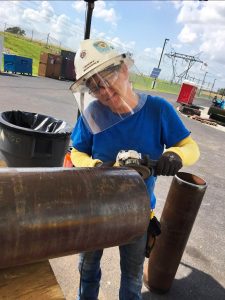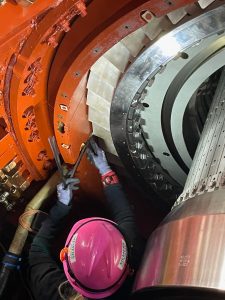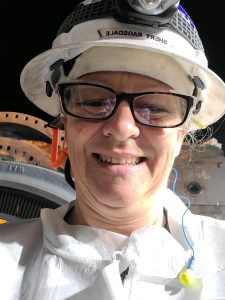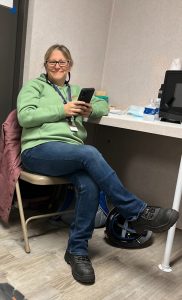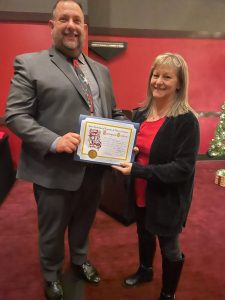
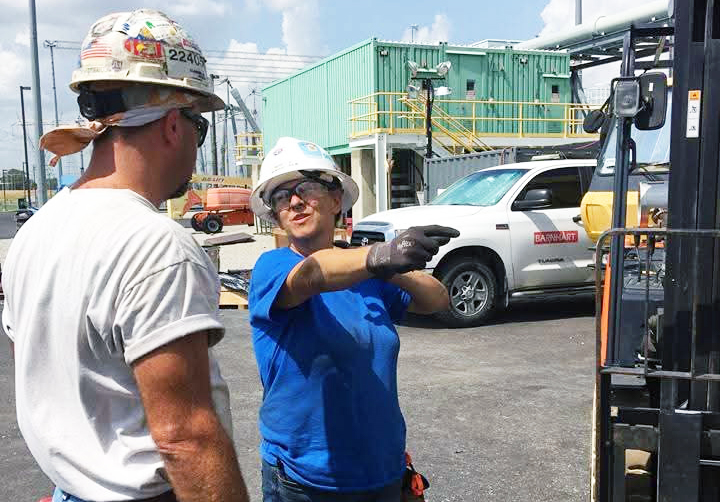
Shery Ragsdale became a union millwright at age 49, after working as a nurse and a high-level manager with the Tupperware company. Read our Q&A with this Local 216 member to learn more about her bittersweet journey and her message for fellow members.
Q: Why did you join the union?
A: My late husband was a millwright, and when he passed, the income went with it. I had quit my job four months before that and went on the road with him. Our plans were, when we got home, I was going to go down to the union hall and sign up, and he was going to be my mentor. And then he passed away, and so I had no income, and I didn’t think that I could follow through with that plan, to be honest.
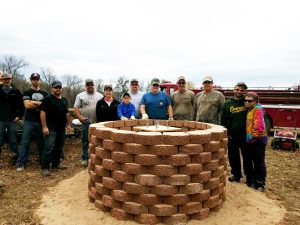
And the millwrights came out to help me build a memorial for my husband. They were his friends. And I was like, “I don’t know what I’m going to do.” And they said to me, “Well, why wouldn’t you do it?” And I said, “Because I don’t know how to tow the camper, and I have no idea what I’m doing.” And said, “They’ll teach you what you need to know.” That was on a weekend, and the following Monday I went down and asked to join.
Q: What types of work had you done before?
A: I was a nurse, but to go back into nursing, I was going to have to school to get relicensed. I didn’t have the time to go back to school and to do that process over. I was actually a director for Tupperware, but it was very much a customer-service-type business, and at that point in time, I was going through the grief process. The last thing I wanted to do is deal with people.
Q: What was it like to transition into a trades career?
A: I did nothing but sit in class at first because we had enough money to get me through a few months. I taught myself how to back up the camper in a field. And then I went on my first job in early 2018, and I can look back at it now and I realize that those union brothers are really what saved me, not only financially, to be able to replace my income, but just not leaving me out here in the country, sitting in a house by myself. That became my road family, and they taught me what I needed to know. I had some wonderful mentors.
Q: It sounds like you mostly travel for work.
A: Yeah, I do mostly turbines, mostly nuclear. I’ve done a few steam turbines, and I have worked some new construction. I was actually a supervisor on a new build, but mostly I work spring and fall. That way I can balance. Because I have a special-needs son who has special living arrangements, but I still need to be able to have him home when I can, so that gives me a little bit of flexibility.
Q: I imagine you’re working a lot of hours during the spring and fall outage seasons.
A: We work 7-12s [12-hour shifts, seven days a week], so you make bank and then you save.
Q: Tell me about your husband’s memorial.
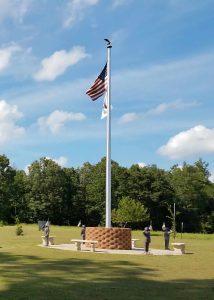
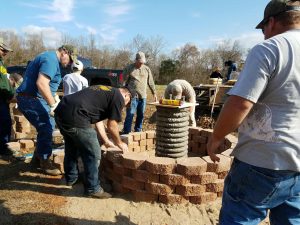
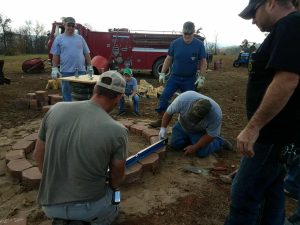
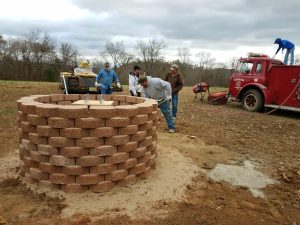
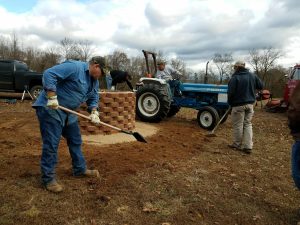
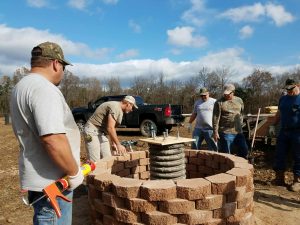
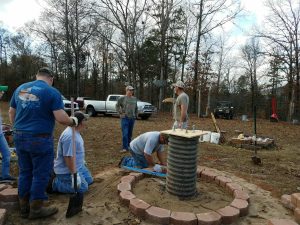
A: My husband didn’t want a military funeral. He wanted his ashes scattered on a piece of property that we owned, his family farm. And so we made a decision to build a planter to put his ashes in, and we have a 30-foot flagpole to hang his the U.S. flag and his military Airborne flag. I wasn’t really quite sure how I was going to build it. So I got out there and had drilled the hole and everything to make a concrete base for the flagpole. A handful of millwrights showed up on my property, and they helped me lift and seat that flagpole and concrete it in. And they built the planter that went around it. And then some of them came by over time. We put pavers on the ground and built a seating area with benches and the army statues at north, south, east, and west.
Q: What do you like best about your work?
A: I love what I do. I love learning new things. You’re proud of yourself when you accomplish something that you didn’t know you could do. I like the flexibility, and I like that every plant you go to is different. No matter how long you’re doing it, you’re still learning. When you put a machine together and you walk away from it and it goes online, and you know that you did that, that’s a cool feeling. Most of the world doesn’t know we keep your electricity going, and everybody’s dependent on electricity, so there’s a huge sense of accomplishment.
Q: Is there any advice you would give to someone who’s new to the union and this type of work?
A: Learn all you can. I’ve been on jobs and I didn’t understand what they were talking about, so I’d spend my break Googling it. Learn from the people that know. And if you have people that don’t want to teach you, that’s OK, go ask someone else.
Sometimes it’s not easy being new. I think it’s important to support the new people that come in because you don’t ever know what somebody’s going through. My story is just one story, but you may have somebody who has a new baby that is struggling to make ends meet. They tell us all the time, recruit and retain. And some of that retention is being able to understand that different people are going through different things. The union is an opportunity that a lot of people don’t even know exists. It saved me. And who’d have thought a 49-year-old woman would strap on a pair of boots and go do this?