
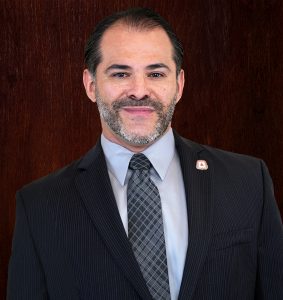
For Victorino Sanchez, Director of Western Business Services and military veteran, the job site can be like a battlefield. In the military world, emotions hinder your ability to lead and follow through with your responsibilities, according to Sanchez.
“The military are not trained to show any emotion. It is literally life or death, you do not let emotions guide your actions,” said Sanchez. “If you let your emotions or feelings get the best of you it can be detrimental to the other members of your unit.”
Old habits die hard; once you teach yourself to shut off your emotions to survive, it is a hard lesson to unlearn in the civilian world.
Sanchez himself served in the military and transitioned into construction shortly after. It prepared him for working in the industry, where the environment is less harsh and severe, but much closer than other lines of work.
“The military community and the construction community go hand-in-hand. As construction hands, we’re supposed to be very rough and tough, thick-skinned, man’s men, no emotion or weakness. If you do show any kind of emotion or weakness everybody else jumps on you like a pack of wolves,” said Sanchez.
Veterans are heavily represented in the construction industry. Their experience in the military has uniquely prepared them both physically and mentally for the often difficult work. Unfortunately, it is also an industry with a similar stigma around mental health and illness.
“The suicide rate in construction in the highest among every other industry,” said Sanchez. “When you combine that with military experience in construction; you are several times more likely to fall to suicide.”
Veterans in the industry are often identified as “dual-risk.” Their potential mental health issues, like Post Traumatic Stress Disorder (PTSD), from their service predispose them to further problems in the construction industry.
Sanchez himself was diagnosed with Bipolar Disorder and PTSD following his military deployment in Bosnia and Herzegovina.
“It affects me every day of my life.”
His journey dealing with his condition has been tumultuous, facing roadblocks like denial, isolation, and trouble with the law.
“One of the biggest roadblocks to dealing with mental health is taking that first step. It took me every bit of 15 years to acknowledge this was happening to me. It took me going to jail twice and facing reality and being able to acknowledge I did need help, that I did have an issue,” said Sanchez.
“The PTSD and Bipolar Disorder came to a head and landed me in and out of jail for a year. I was having thoughts and feelings and delusions that I was still in the military, and was being chased. My paranoia was unhealthy; I was saying there was nothing wrong with me as I’m loading several pistols and putting them in my belt and boot just to go to the grocery store.”
Sanchez has come a long way to overcome and gain control over his illness. He manages a strict 3-pronged treatment process with constant contact from his mental health physician at the VA, medication, and meeting with local support groups. He cites the latter as a real breakthrough in his journey, and one that he recommends to anyone facing similar struggles with mental health.
“Walking into a group full of strangers was very tough, but after hearing everybody share their story, you listen, start to participate, and start taking and giving advice to people who were once strangers,” said Sanchez.
This idea of community and connectedness is incredibly important in conversations about mental health, especially in the construction industry. The SRCC gives its members a strong, stable sense of community, and helps those that are struggling with mental illness to know they are not alone. Otherwise, facing the existing stigma in the industry alone can be a silent killer.
The lack of emotional vulnerability that prevents those in construction to share their issues can lead to ‘suffering in silence.’
“You don’t want to be thought of as not capable of carrying out your duties when you’re managing your condition,” said Sanchez. In the unforgiving environment that is the jobsite, to be thought of incapable, emotional, or powerless is death.
The next biggest killer to emotional vulnerability and dealing with mental health, as it turns out, is humor. “Any mental health catchphrase is used as a punchline. Someone demonstrates a little bit of anger or sadness on a bad day and they say ‘he’s just bipolar or schizo’ or ‘they are just off their meds today.’ This is no laughing matter, it’s life and death,” said Sanchez. “(You are told to) just snap out of it, if it was only that simple. There is no miracle cure for any kind of mental health situation. You just manage it, the same way an alcoholic or a drug addict would.”
“If that statistic doesn’t alarm the general population, it should,” said Sanchez.
Sanchez also says that awareness has taken a turn for the better. He goes to a yearly mental health conference for professionals in the construction industry where he sees the change actively taking place in the industry.
“Education, awareness, and breaking away from the stigma. The awareness is catching up and there is hope,” said Sanchez.
Sanchez will never stop being a mental health advocate for his community. He implores not only those affected by illness to seek help, but also family and close ones to act in support as well.
“When you know they’re struggling, push them and encourage them to seek the treatment that they need. Don’t ostracize them and don’t make fun of them,” said Sanchez.
“It’s okay to not be okay, but it’s not okay to go through it all alone. It’s a strength to acknowledge and seek treatment for your illness.”